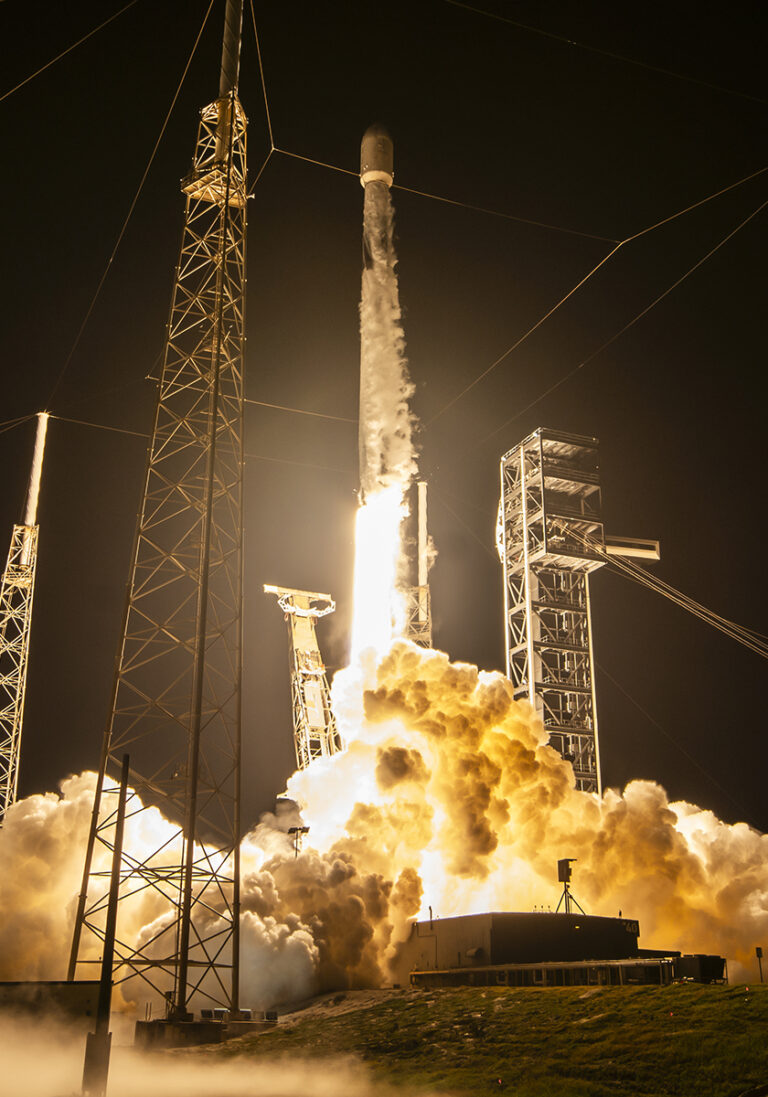
Sunday-morning boom followed Roman Space Telescope launch and booster returns
A loud boom reported Sunday morning followed the launch of NASA’s Nancy Grace Roman Space Telescope and the return of two Falcon Heavy side boosters to the Space Coast.
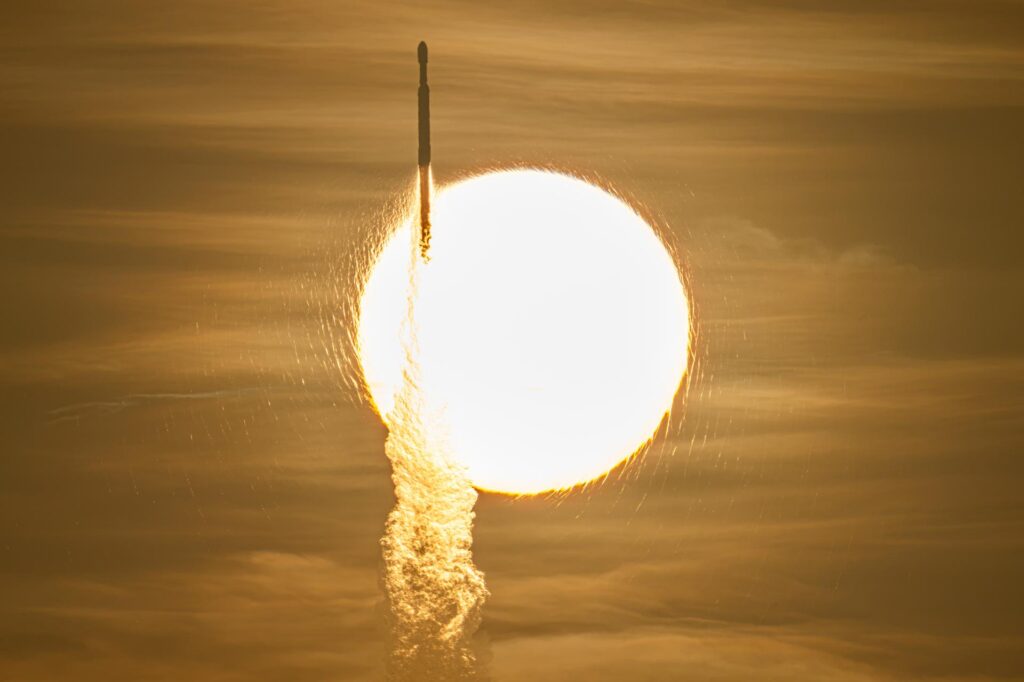
NASA said the SpaceX Falcon Heavy lifted off from Launch Complex 39A at Kennedy Space Center at 7:26 a.m. EDT on Aug. 30. The rocket’s two side boosters later landed at Landing Zone 2 and Landing Zone 40 in Florida. Those powered returns were the expected source of the sonic booms flagged for nearby communities before launch.
CFL Report posted a short Facebook update at 7:32 a.m. telling readers that the sound was a SpaceX booster return. NASA’s mission timeline confirms that the Falcon Heavy was flying at that time and that both side boosters returned to Florida. The noise was one local effect of a larger mission that sent the Roman Space Telescope toward its destination.
Roman is flying on its own
The mission continued after the boosters landed. NASA reported that the observatory separated from the Falcon Heavy’s second stage at 7:57 a.m. and began operating on its own. Communications had been established earlier through NASA’s Tracking and Data Relay Satellite system.
Roman is beginning a journey of roughly 1 million miles to an orbit around the second Sun-Earth Lagrange point, known as L2. NASA said the spacecraft deployed its Solar Array Sun Shield after separation. The structure supplies power and also helps keep the observatory cool.
Falcon Heavy uses 27 Merlin engines across its three first-stage cores. NASA says they generate more than 5 million pounds of thrust at liftoff. One returning side booster was making its first flight; the other was completing its third after supporting the GOES-U and Viasat-3 F3 missions.
A wide view of the universe
Once commissioned, Roman is designed to survey large areas of the sky and address questions about dark energy, dark matter and worlds beyond the solar system. Its Wide Field Instrument will give astronomers a broad view of the universe, while a technology-demonstration coronagraph will test techniques for blocking starlight to study planets around other stars.
For residents, the brief boom was the local signature of a much longer mission. NASA says Roman will spend about three months traveling to its destination before commissioning and science work. Future coverage of the telescope’s health or schedule will rely on NASA’s Roman mission updates rather than social-media speculation about the sound.
Sources: science.nasa.gov, science.nasa.gov, science.nasa.gov, science.nasa.gov, nasa.gov, linkedin.com.
Original CFL Report Facebook coverage (1 update)
These captions are preserved from the original posts. Early descriptions may be superseded by the verified information in the article above.
Facebook update — 08/30/2026, 07:32:16 EDT
That “explosion” you just heard… It’s just space x booster return.
It will be coming in all of the what’s happening groups. Here’s your prevention post.