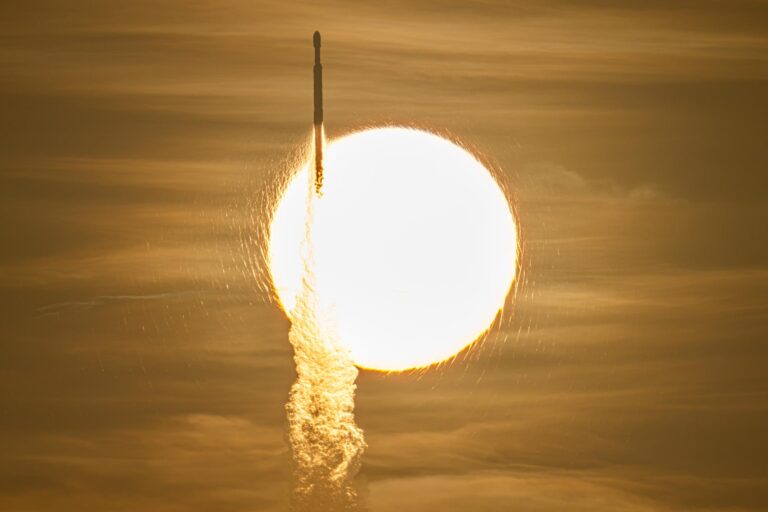
Falcon 9 return explains Saturday-night sonic boom after Cape Canaveral launch
A loud boom reported Saturday night had a planned source at Cape Canaveral: the return of a SpaceX Falcon 9 first stage following a commercial satellite launch. The return and satellite deployment were part of the scheduled mission.
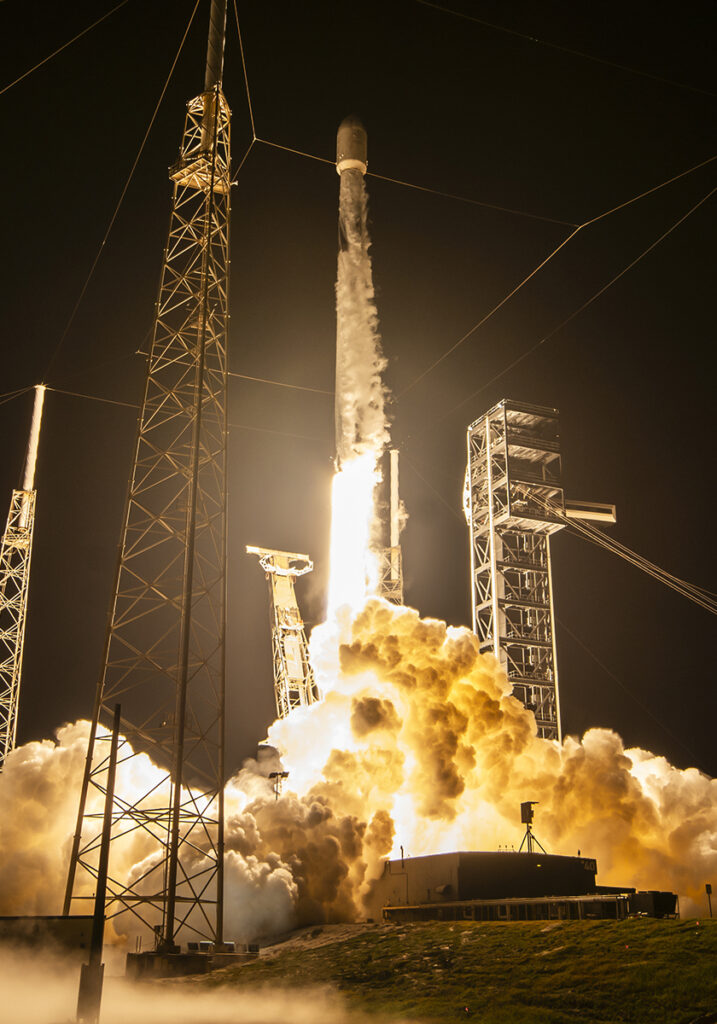
The rocket lifted off from Space Launch Complex 40 at Cape Canaveral Space Force Station at approximately 9:12 p.m. Aug. 15, carrying eight HIBLEO-4 replacement satellites for Globalstar. After separation, the first stage flew back toward the coast and landed at Landing Zone 40. That return profile produces sonic booms as the booster travels through the atmosphere, providing a straightforward explanation for the sound reported shortly after launch.
The launch outcome was confirmed the following day. Globalstar said all eight satellites were successfully dispensed, reached their intended orbital planes and established communications with the company’s ground network. The satellites then entered commissioning, the period in which controllers test systems before placing the spacecraft into regular service. Globalstar described the mission as part of the continued replenishment of its low-Earth-orbit constellation.
The original CFL Report Facebook item was posted at 9:25 p.m. Saturday and attributed the sound to the rocket at the Cape. That central claim is supported by the published launch time and landing profile. The post did not identify a precise listening location, however, so this article does not claim an official hearing radius. Whether a person heard the boom can vary with weather, geography, the booster’s path and local background noise.
A sonic boom is not evidence that a rocket exploded. It is a pressure wave created when an object travels faster than the speed of sound. Returning boosters can generate more than one distinct report because different parts of the vehicle create shock waves. Residents near Florida’s Space Coast have experienced similar sounds during other returning missions.
SpaceX’s Falcon launch guide identifies Space Launch Complex 40 as one of its Florida launch sites. Spectrum News 13’s mission coverage also documented both the scheduled launch time and the planned first-stage return to Landing Zone 40, while Globalstar’s own release supplies the primary confirmation that the satellite deployment succeeded.
For readers trying to identify a future unexplained boom, an announced launch and a return-to-launch-site landing are useful clues, but they are not a substitute for an official alert during an emergency. Anyone who sees damage, smoke or an immediate hazard should still contact the appropriate public-safety agency rather than assuming a rocket caused it.
Sources: investors.globalstar.com, baynews9.com, spacex.com.
Original CFL Report Facebook coverage (1 update)
These captions are preserved from the original posts. Early descriptions may be superseded by the verified information in the article above.
Facebook update — 08/15/2026, 21:25:40 EDT
You likely just heard a sonic boom from the rocket launch at the cape. 🚀